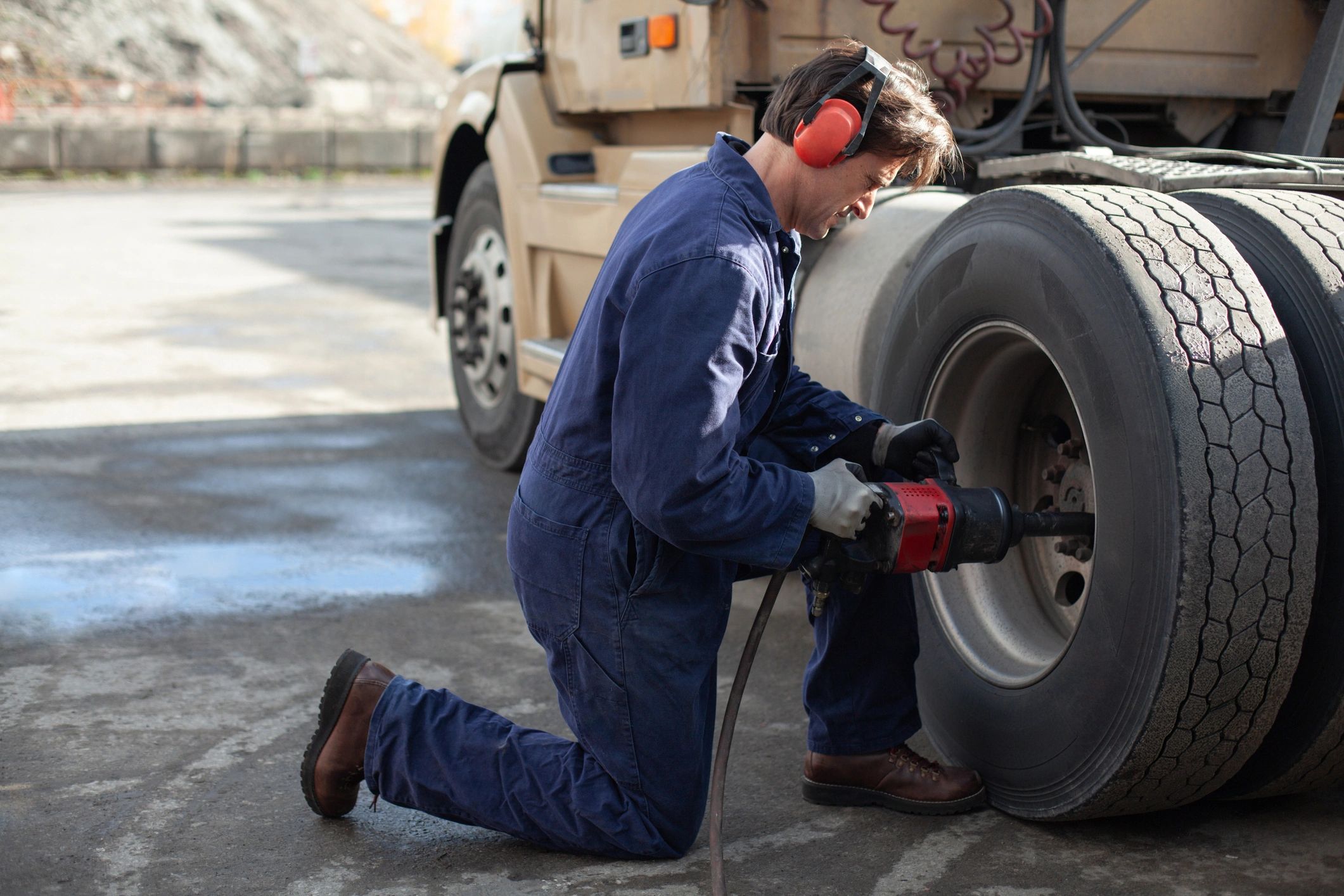
What to Do When Your Truck Gets a Flat on the N1 at Night
A flat tyre on a major highway at night is dangerous and stressful. This step-by-step guide tells your drivers exactly what to do to stay safe and get back on the road fast.
What to Do When Your Truck Gets a Flat on the N1 at Night
It is 2 AM. You are on the N1 between Johannesburg and Pretoria. You feel the familiar lurch and vibration that tells you a tyre has gone. Traffic is moving at 120 km/h around you. What do you do?
This is not a hypothetical scenario — it happens to South African truck drivers every single night. How your driver responds in the next 60 seconds determines whether this is a manageable inconvenience or a serious accident. This guide gives your drivers a clear, step-by-step procedure to follow.
Step 1: Do Not Brake Hard or Steer Sharply
The instinctive response to a sudden tyre failure is to brake and steer away from the problem. This is the wrong response and it can cause a rollover or loss of control.
When a tyre deflates suddenly, the vehicle will pull strongly toward the affected side. Your driver needs to:
- Grip the steering wheel firmly with both hands
- Ease off the accelerator gradually — do not lift off suddenly
- Do not apply the brakes until the vehicle has slowed naturally to a manageable speed
- Steer gently to counteract the pull — small corrections, not large inputs
- Allow the vehicle to slow using engine braking before applying the service brake gently
The goal is to maintain control and slow the vehicle progressively, not to stop it immediately.
Step 2: Get Off the Road Safely
Once the vehicle is under control and slowing, the priority is to get it off the active lanes of traffic as quickly and safely as possible.
- Signal your intention — hazard lights on immediately
- Move to the emergency lane — do not stop in a live lane under any circumstances
- Aim for a safe stopping point — a wide emergency lane, a rest area, or a truck stop is preferable to stopping on a narrow shoulder
- Keep moving slowly if necessary — a flat tyre can be driven on at very low speed for a short distance to reach a safer stopping point. The tyre will be destroyed, but that is a better outcome than stopping in a dangerous position
If you are on a section of road without an emergency lane — which is unfortunately common on some South African national routes — get as far off the road surface as possible and stop.
Step 3: Make the Vehicle Visible
Once stopped, your driver's next priority is making the vehicle as visible as possible to approaching traffic. At night on a busy highway, a stationary truck is a serious hazard.
- Hazard lights — on immediately and leave them on
- Warning triangles — place them at 45 metres, 90 metres, and 150 metres behind the vehicle in the direction of approaching traffic. On a highway at night, err on the side of placing them further back
- Reflective vest — your driver should put on a high-visibility vest before getting out of the cab. This is a legal requirement in South Africa and a genuine lifesaver
- Stay away from the traffic side — all activity should happen on the side of the vehicle away from traffic
Do not attempt to change the tyre on the traffic side of the vehicle. If the flat is on the traffic side, wait for professional assistance.
Step 4: Assess the Situation
Once the vehicle is safely stopped and visible, your driver should assess the situation:
- Which tyre has failed? Walk around the vehicle to identify the affected tyre
- Is the vehicle safe to leave? Check that the vehicle is on stable ground and will not roll
- Is there any other damage? A blowout at speed can cause damage to mudguards, brake lines, and other components
- What is the driver's condition? A tyre blowout is a stressful event. Make sure the driver is calm and uninjured before proceeding
Step 5: Call for Assistance
Unless your driver is trained and equipped to change a commercial truck tyre — which is a physically demanding task requiring proper equipment — the next step is to call for professional roadside assistance.
Call Apex Tyre Solutions: +27 079 294 4277
We operate 24/7 across South Africa and carry stock for the most common commercial tyre sizes. When you call, have the following information ready:
- Your exact location (GPS coordinates from your phone, or the nearest kilometre marker)
- The vehicle registration number
- The tyre size (visible on the sidewall of the flat tyre or any other tyre on the vehicle)
- Whether the vehicle is blocking traffic or safely off the road
Our team will give you an estimated arrival time and keep you updated.
Step 6: Stay Safe While You Wait
Waiting for roadside assistance on a South African highway at night carries its own risks. Your driver should:
- Stay in the cab if it is safe to do so — the cab is the safest place on a stranded vehicle
- Keep hazard lights on and check that warning triangles are still in place
- Do not accept assistance from strangers — unfortunately, roadside crime is a reality on South African highways. Your driver should wait for the professional assistance they have called
- Keep the fleet manager or dispatcher informed — regular check-ins are good practice
- Do not attempt to change the tyre in the dark on a busy highway without proper lighting and equipment
What Fleet Managers Should Do
When a driver reports a roadside tyre failure, the fleet manager's role is to:
- Confirm the driver is safe — this is the first priority
- Confirm the vehicle is safely off the road and visible to traffic
- Contact roadside assistance if the driver has not already done so
- Notify the customer if the delay will affect delivery
- Document the incident — location, time, tyre details, and circumstances
Good documentation of tyre failures is valuable data for your tyre management programme. Patterns of failures on specific routes, axle positions, or tyre brands can inform better purchasing and maintenance decisions.
Preparing Your Drivers Before It Happens
The best time to train your drivers on tyre blowout procedures is before they need them. Include tyre emergency procedures in your driver induction programme and refresh them regularly. Make sure every driver has:
- The Apex Tyre Solutions emergency number saved in their phone: +27 079 294 4277
- A reflective vest in the cab
- Warning triangles that are in good condition
- Knowledge of how to read their GPS location to communicate it to assistance
A driver who knows exactly what to do in the first 60 seconds of a tyre failure is a driver who is far more likely to handle the situation safely.
Explore Topics
Written by
Apex Tyre Solutions
Content creator and writer sharing insights and stories.