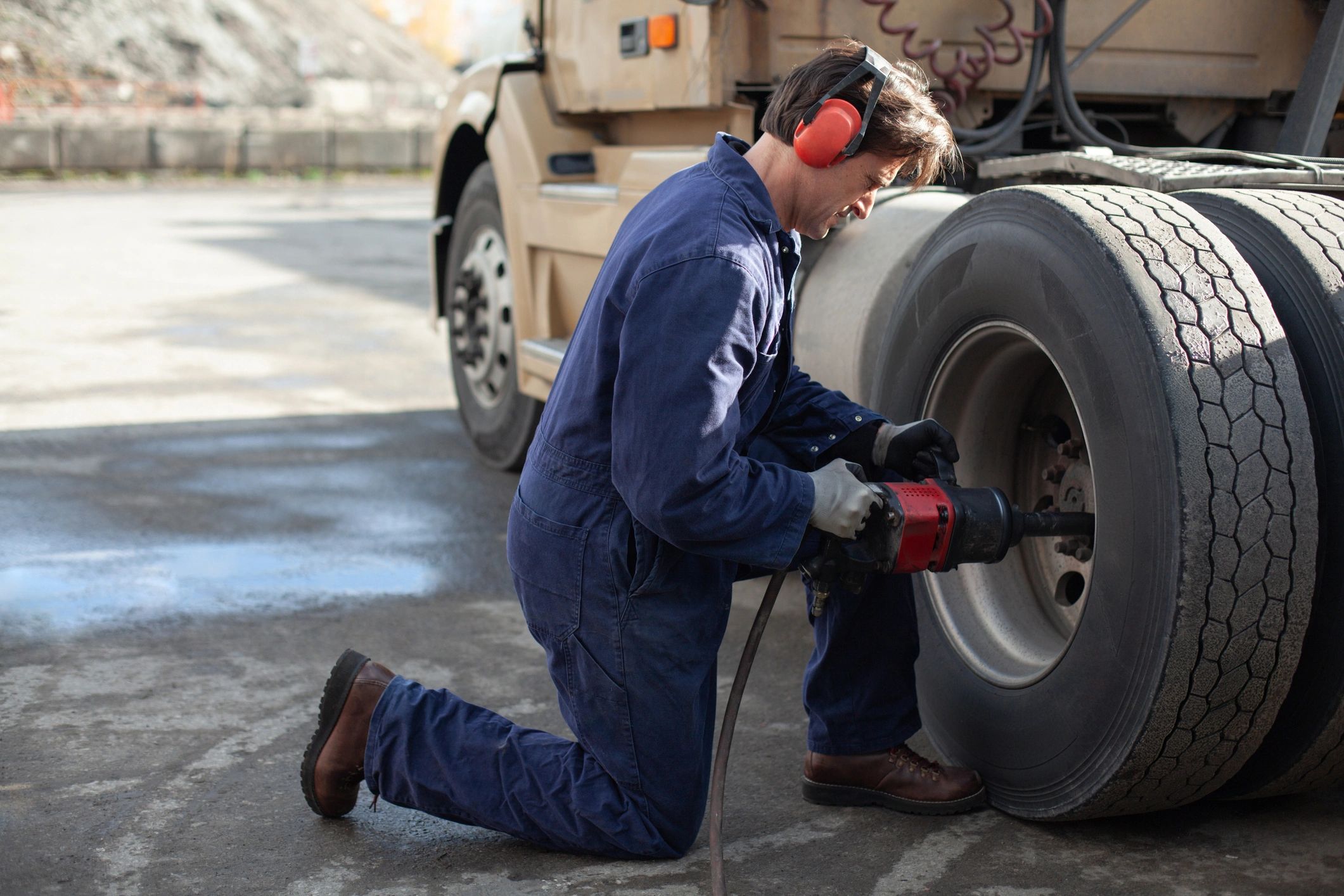
How to Choose the Right Tyres for Your Commercial Fleet
Selecting the wrong tyres for your trucks costs more than you think. Here is a practical guide to making the right call for every vehicle in your fleet.
How to Choose the Right Tyres for Your Commercial Fleet
The wrong tyre on the wrong truck is one of the most expensive mistakes a fleet manager can make. It does not just increase your tyre replacement costs — it affects fuel consumption, driver safety, vehicle handling, and the frequency of roadside breakdowns. With dozens of tyre options on the market, making the right call for every vehicle in your fleet requires more than just picking the cheapest option.
This guide breaks down exactly what to consider when specifying tyres for your commercial fleet.
Understand Your Application First
Before you look at a single tyre catalogue, you need to be clear on how each vehicle in your fleet is actually used. A long-haul truck running the N1 between Johannesburg and Cape Town has completely different tyre requirements to a distribution vehicle making 30 short stops a day in an urban area.
Ask yourself:
- What routes does this vehicle run? Highway, urban, gravel, or mixed?
- What loads does it carry? Is it consistently at maximum GVM or running light?
- What axle position? Steer, drive, and trailer axles each require different tyre designs.
- What distances? High-kilometre highway routes favour different compounds than short-haul urban work.
Getting this right before you specify a tyre saves you from expensive mistakes down the line.
Steer, Drive, and Trailer Axles Are Not Interchangeable
This is one of the most common errors fleet managers make — treating all axle positions as the same. They are not.
Steer Axle Tyres
Steer tyres need to deliver precise handling, even wear, and good wet-weather performance. They typically have a rib-pattern tread design that channels water away efficiently and provides stable steering response. Never fit a drive or trailer tyre on a steer axle — the handling characteristics are fundamentally different and the safety implications are serious.
Drive Axle Tyres
Drive tyres need to transmit engine torque to the road without spinning or wearing prematurely. They typically feature a lug or block tread pattern that provides traction under load. For mixed on/off-road applications, look for a more aggressive lug pattern. For pure highway work, a shallower, more fuel-efficient pattern is the better choice.
Trailer Axle Tyres
Trailer tyres are designed for free-rolling rather than driven or steered operation. They typically feature a rib or block pattern optimised for even wear across the full tread width. Because trailer axles can scrub tyres aggressively during cornering, alignment and inflation management are critical here.
Load Index and Speed Rating — Non-Negotiable
Every commercial tyre carries a load index and speed rating on its sidewall. The load index tells you the maximum load the tyre can carry at its rated inflation pressure. The speed rating tells you the maximum sustained speed.
Never fit a tyre with a lower load index than the vehicle's axle load requires. This is not just a performance issue — it is a legal and safety issue. An overloaded tyre runs hotter, wears faster, and is significantly more likely to fail catastrophically.
For South African conditions, always check:
- The vehicle's GVM and axle load ratings (on the registration certificate)
- The tyre's load index at the inflation pressure you intend to run
- That the combination meets or exceeds the legal axle load limits
Tread Depth and Compound Matter for South African Roads
South Africa's road network is diverse — from well-maintained national highways to provincial roads with significant surface deterioration, potholes, and debris. The tyre compound (the rubber formulation) determines how the tyre performs across this range.
Harder compounds last longer on smooth highway surfaces but can struggle to grip on rough or wet roads. Softer compounds provide better grip and cut resistance but wear faster on high-speed highway work.
For most South African fleet applications, a medium-compound tyre from a reputable manufacturer offers the best balance. Avoid the temptation to save money on budget tyres from unknown manufacturers — the false economy of a cheaper tyre that wears out in half the kilometres is well understood by experienced fleet managers.
Fuel Efficiency Is a Real Factor
Rolling resistance accounts for a significant portion of a truck's fuel consumption — estimates range from 15% to 30% depending on the application. Low rolling resistance tyres are specifically engineered to reduce this, and the fuel savings over a high-kilometre fleet can be substantial.
If your fleet runs primarily on highways at consistent speeds, the investment in low rolling resistance tyres typically pays back within 12 to 18 months through reduced diesel costs.
Retreads: A Legitimate Option for the Right Application
Retreaded tyres have a poor reputation in some quarters, but a quality retread from a reputable retreader on the correct casing is a legitimate and cost-effective option — particularly for trailer axles and drive axles on lower-speed applications.
The key is casing quality. A retread is only as good as the casing it is built on. Insist on retreads built on casings that have been properly inspected and graded, and never retread a casing that has been run flat or suffered structural damage.
Tyre Pressure Management Is Part of Tyre Selection
The best tyre in the world will underperform and wear prematurely if it is run at the wrong pressure. Inflation pressure affects load capacity, fuel consumption, tread wear pattern, and heat generation.
When specifying tyres for your fleet, establish the correct inflation pressures for each axle position and load condition, and build a pressure check routine into your pre-trip inspection process. A tyre pressure monitoring system (TPMS) is worth considering for high-value or high-kilometre vehicles.
Work With a Specialist, Not Just a Supplier
The best tyre choice for your fleet is not always the one with the lowest unit price or the most familiar brand name. Work with a tyre specialist who understands commercial fleet applications and can analyse your actual operating data — kilometres per tyre, failure modes, wear patterns — to make evidence-based recommendations.
At Apex Tyre Solutions, we work with fleet operators across South Africa to specify the right tyres for their applications and provide 24/7 roadside support when things go wrong. If you would like to discuss your fleet's tyre requirements, contact us on +27 079 294 4277.
Explore Topics
Written by
Apex Tyre Solutions
Content creator and writer sharing insights and stories.